Rotate Cat Toys: Simple Schedule to Stop Indoor Boredom
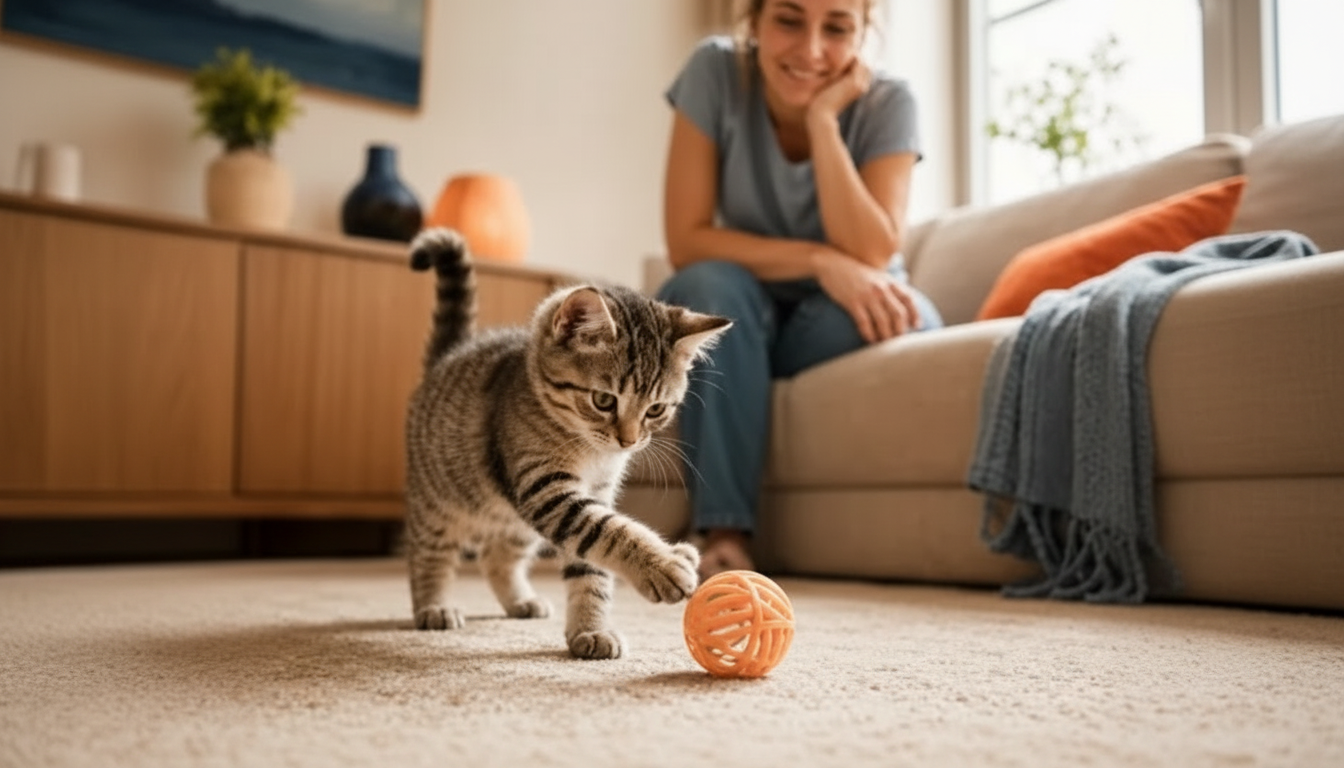
How can I rotate cat toys to keep my indoor cat from getting bored?
Rotation works because “new” doesn’t have to mean “brand-new.” By limiting what’s available each day and swapping toys on a predictable schedule, you’ll keep novelty high, prevent overstimulation, and make playtime feel rewarding again.
Use a simple toy “library” system
Gather all toys and sort them into 3–5 small groups (bags or bins). Put only one group out at a time, and store the rest out of sight. Cats are visual hunters—if a toy is always visible, it stops feeling like prey.
Follow an easy weekly rotation
Swap groups every 2–3 days, or do a weekly reset on the same day. Keep 5–8 toys available at once (fewer is usually better). Include a mix each round: one wand toy (supervised), one kicker, one ball/chaser, and one “brain” toy like a treat puzzle.
Change how a familiar toy “behaves”
Novelty isn’t just the object—it’s the motion. Drag a mouse toy under a blanket, bounce a ball down a hallway, or perch a toy on a cat tree so your cat has to climb. For wand toys, vary speed and pauses so your cat gets a realistic hunt-catch “win.”
Refresh toys between rotations
Before reintroducing a toy, try a quick “reset”: rub it on a scratching post, sprinkle a pinch of catnip (if your cat responds), or tuck it into a paper bag for an hour so it smells different. Retire anything frayed or with loose strings.
Pair rotation with a short play routine
Two daily sessions of 5–10 minutes—especially before meals—can prevent boredom better than leaving toys out all day. End with a small treat or dinner to complete the hunt sequence.
For more indoor enrichment ideas, DIY toy options, and play routines, see the full guide: Indoor Cat Enrichment: DIY Toys, Play Routines & Home Tips.
FAQ
What are some signs my indoor cat is under-stimulated?
Common signs include frequent night zoomies, attention-seeking yowling, overgrooming, destructive scratching, or stalking ankles. Many cats also lose interest in toys quickly when they’re bored or stressed.











Leave a comment